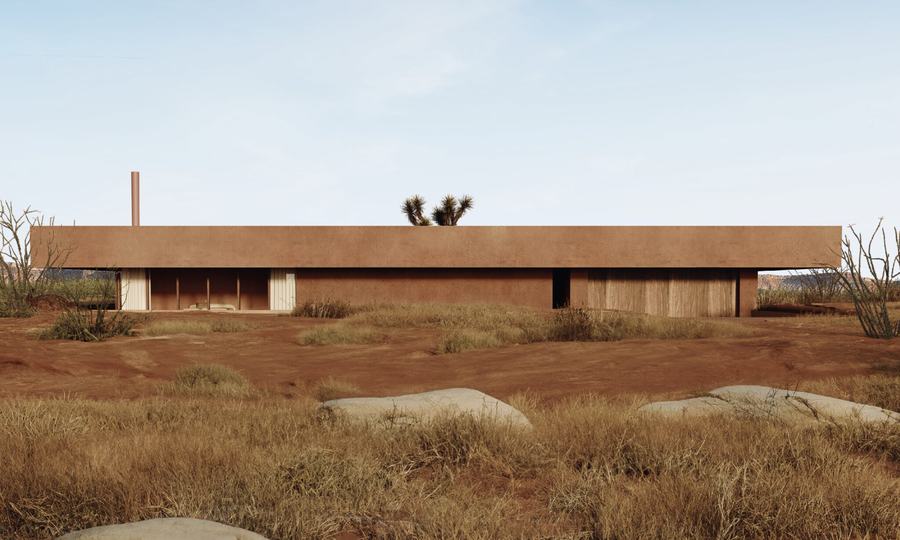
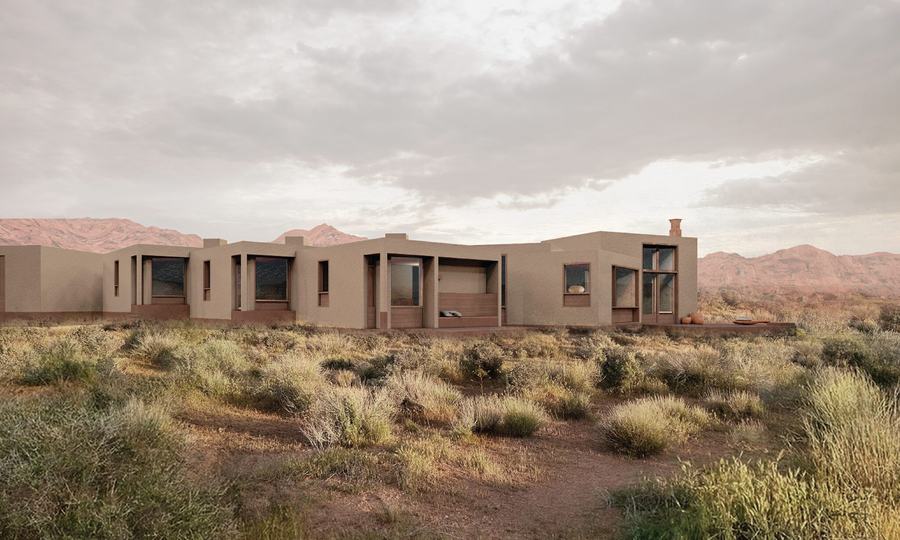
High-end residential deserves the same engineering rigor as a commercial building — without the commercial price tag or the commercial timeline. Red Brick Engineering is the MEP engineer for custom and mountain homes that refuse to compromise: rammed-earth walls in the Utah desert, all-electric rebuilds on the California coast, and ski-country retreats where the design temperature drops well below zero. One principal PE stamps mechanical, electrical, and plumbing on every set, so architects and builders work with a single accountable partner instead of coordinating three.
Custom and luxury residential lives in a gap. Production builders lean on prescriptive tables and HVAC contractors' rules of thumb; commercial firms are set up for large-fee projects and treat a single home as an afterthought. Neither serves an architect who has spent a year on a one-off house with a specific climate, a specific envelope, and a client who expects it to perform.
We close that gap with commercial-grade documentation at residential pricing. That means real load calculations tied to your actual wall assemblies and glazing, coordinated Revit/BIM models you can hand a builder without a translation step, and drawings a plan reviewer signs off on the first time. You get the discipline of a commercial set scaled to the scope and budget of a private home.
The homes we engineer sit in conditions where off-the-shelf assumptions fail. High thermal-mass envelopes — rammed earth, concrete, deep masonry — store and release heat on a delay that a naive peak-load calculation gets wrong, oversizing equipment and killing efficiency. We model the mass so the mechanical system is sized for how the building really behaves, as we did on the rammed-earth Pala Zion homes near Zion National Park.
Altitude compounds it: on a mountain or high-desert site we apply the correct altitude-corrected sensible-heat factor rather than the sea-level default, which changes airflow and equipment selection materially. Combine mass, altitude, and glazing and you have a load picture a spreadsheet template cannot produce.
All-electric is where most residential MEP quietly cuts corners. A heat pump that looks strong on a 47°F cut sheet can fail to hold temperature in a Wasatch or Sierra winter, so we design to the actual site design temperature — down to sub-zero where the climate demands it — and verify real cold-climate performance, defrost behavior, and minimum operating temperature. If a system needs backup capacity or a specific NEEP/ENERGY STAR cold-climate unit, that's in the design before it becomes a callback.
That rigor is why all-electric works on our sets. Our Malibu wildfire rebuilds are fully electric custom homes on the California coast, engineered for all-electric performance and Title 24 compliance — proof that an all-electric home can be both code-compliant and genuinely comfortable when the load work is honest.
We handle the energy-compliance paperwork that stalls custom projects: COMcheck and REScheck, and full California Title 24 for coastal and Southern California work. Because the compliance path is decided during design rather than bolted on at the end, the numbers agree with the drawings and the reviewer has nothing to bounce.
Custom homes lose months to permitting and revision cycles. We deliver permit-ready, coordinated sets on a schedule custom projects rarely see, and single-stamp accountability means one PE owns every coordination question instead of pointing between disciplines. Architects who work with us once tend to bring us back — the second project is faster because the standards are already shared.
Mechanical, electrical, and plumbing — designed and stamped by the same principal engineer.